Forget choosing between the various sauna types. That’s the easy part. Picking the right sauna wood type for your climate, installation location, and property is where most people get stuck.
Cedar, ash, pine, spruce, poplar, alder, aspen - there are tons of options at your disposal.
Each of the different wood types for a sauna has its pros and cons. This decision impacts everything, from how your sauna looks to how long it lasts, how much it costs, and how much work goes into keeping it pristine over the years.
Premium Saunas is your expert authority on all things saunas. We stock the best models from the industry’s most trusted brands, and we’re going to help you make the right call for your specific setup below. So, what type of wood is used in a sauna?
Quick Look at the Best Wood For Sauna
|
Wood Species |
Best For |
Rot Resistance |
Heat to Touch |
Aroma |
Cost |
|
Western Red Cedar |
Outdoor, barrel saunas |
Excellent |
Stays cool |
Rich, aromatic |
$$$ |
|
Common Aspen |
Indoor, traditional |
Moderate |
Stays cool |
None |
$$ |
|
Alder |
Indoor, traditional |
Moderate |
Low |
Mild |
$$ |
|
Norway Spruce |
Traditional, DIY |
Good |
Moderate |
Light pine |
$ |
|
Canadian Hemlock |
Infrared, indoor |
Good |
Low |
None |
$$ |
|
Poplar |
Budget builds |
Moderate |
Low |
Minimal |
$ |
|
Magnolia |
Indoor, specialty |
Good |
Low |
Minimal |
$$ |
|
Ash |
Premium builds |
Excellent |
Moderate |
None |
$$$ |
|
Radiata Pine |
Budget outdoor |
Good (thermally modified) |
Moderate |
Light pine |
$ |
What Type of Wood is Used in a Sauna?
Our advice on what type of wood is used in a sauna is never one-size-fits-all. It all depends on the way you want your sauna to look, where it’s going to be installed, the conditions it’ll be exposed to, and how much you’re willing to pay.
In general, though, you’ll see softwoods used in sauna structures because they absorb less heat so you aren’t sitting on a super hot bench. That said, you will see certain hardwoods used in more premium builds because they tend to look better and last longer.
Here are the most common sauna wood types you have to choose from.
Western Red Cedar
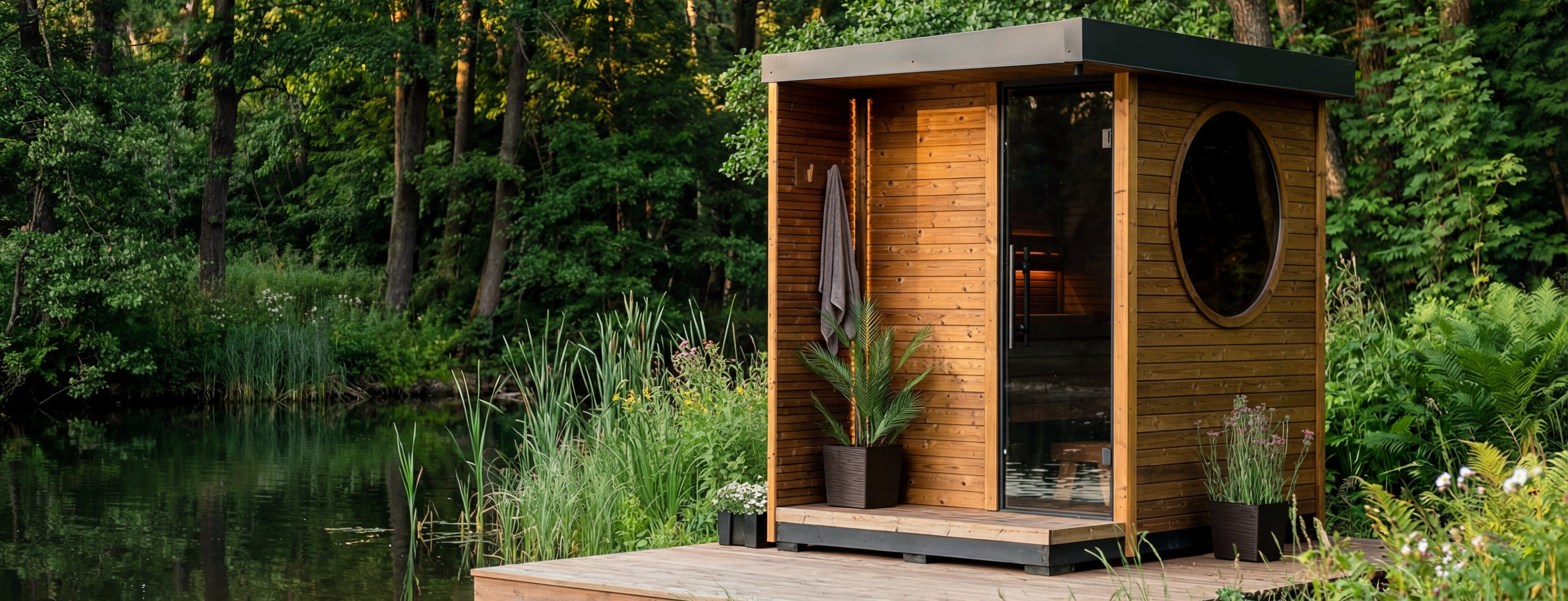
If we could only recommend one type of wood for sauna, it would be this one. Western red cedar has been the go-to species for outdoor cabin and barrel sauna builds across North America for decades.
What separates it from other species is its natural oils. They give this wood exceptional rot and decay resistance while naturally repelling insects. You can install it outdoors without giving it any extra chemical treatment.
Plus, it has a warm, pleasant aroma that makes you feel as if you’re in a lush forest. It has a beautiful reddish-brown color that gets deeper over the years. The only catch is cost. This is a premium sauna wood type for sure.
Pros
- Naturally resists rot, mildew, and insects.
- Doesn’t need any extra maintenance
- Rich aroma enhances the sauna atmosphere
- It looks beautiful in your yard
- Low thermal conductivity means surfaces stay cool to the touch
Cons
- Much more expensive than other types of wood for sauna
- It’s a softwood, so you may see surface scratches and dents over the years
Common Aspen
Finland is where sauna therapy originated centuries ago, and these structures were crafted from aspen. This wood doesn’t produce any resin or fragrance. That could be a good or bad thing depending on what you’re looking for in a sauna.
The light-colored wood is soft to the touch. It’s naturally hypoallergenic, too, so you don’t have to stress about that. It may not have the same weather resistance as cedar, but that’s not a dealbreaker if you’re looking for an indoor sauna.
Pros
- No resin or sap, even at high temperatures
- Hypoallergenic and fragrance-free
- Light color brightens the interior
- Stays cool enough for comfortable seating and backrests
Cons
- Dents and scratches are to be expected with this softwood
- Not great for outdoor saunas with minimal natural resistance to moisture
- Can start looking gray or discolored if you don’t maintain it right
Canadian Hemlock
This is the most common sauna wood type for an infrared sauna, especially those that are to be installed indoors. It looks contemporary with its tight, uniform grain. It doesn’t have any natural scent, either, so it works well in a home where you want something more neutral.
It’s not the cheapest type of wood for sauna, but it’s not nearly as expensive as cedar, either. A really good balance between quality and affordability for an indoor sauna.
Pros
- Looks modern with tight, uniform grain
- No need to worry about allergens since there’s zero off-gassing at high temps
- Very easy to get your hands on - one of the go-to woods for indoor saunas
Cons
- Doesn’t resist rot on its own, so probably not a good choice for outdoor installations
- Don’t expect the same type of aromatic experience some other sauna woods provide
- Surface checking is possible if the sauna is exposed to rapid temperature swings
Alder (Common or Black)
Most European and Scandinavian saunas are built from one of these two types of alder. It sits in a pretty unique middle-ground between hardwoods and softwoods. Just firm enough to resist wear. Not so dense that it absorbs too much heat, though.
Alder ages unlike any other wood species used in saunas. It gradually darkens from a pale pink to a rich honey-brown. That gives alder saunas a level of character you won’t get with others.
Pros
- Ages like a fine wine, getting more beautiful over the years
- Won’t bleed sap from constant heating and cooling cycles (low resin content)
- Density sweet spot - durable and comfortable
- Fine, even grain takes finishes really well if you prefer to go that route
Cons
- Not naturally rot-resistant, so don’t install it outdoors unprotected
- Much rarer than cedar or hemlock here in North America
- Not everyone loves the wood’s darker aging
Norway Spruce
It’s easy to see why spruce has been the backbone of traditional Scandinavian saunas over the years and still today. It’s widely available, easy to mill and install with its straight grain, and most importantly, it’s very affordable.
The one trade-off is resin. Spruce has a ton of natural sap that will inevitably weep from the knots as the structure gets hot. Strategic knot placement is paramount during installation. Still, not a bad choice for a traditional sauna that pays homage to authentic Nordic design.
Pros
- Budget-friendly entry point for saunas
- Straight, even grain simplifies construction
- A clean Scandinavian aesthetic with its light color
- Very structurally solid if you give it the care it needs
Cons
- Resin bleeds from knots as the sauna gets hotter (you might get sticky sap on you)
- Needs more maintenance to prevent moisture damage compared to ash or cedar
- Not as dimensionally stable in humid environments
Poplar
You may not see this species get a ton of mention in the best wood for sauna conversation. But it has a legit place when budget is the main constraint. Poplar is light, easy to work with, and doesn’t conduct a lot of heat.
This is one of those types of wood that just gets the job done without frills. Not that exciting, but it won’t break the bank, either.
Pros
- Very affordable without compromising on durability
- Won’t overheat on contact, so you can sit on it/touch it comfortably
- Super easy to work with since it’s so lightweight
Cons
- Soft enough to show dents and wear pretty quickly
- Pretty much zero moisture resistance, so don’t install it outdoors
- Looks really plain next to cedar, alder, or ash
Magnolia
Magnolia is also a pretty rare sauna wood type, but it absolutely has its place in this conversation. Its fine, even grain and creamy color palette look absolutely stunning.
It’s not just a looker, either. Magnolia handles heat really well without expanding too much. It stays cool to the touch, so you can rest up against the wall inside without worrying about burning yourself.
It’s just hard to get your hands on a sauna made from magnolia - definitely more exclusive.
Pros
- Super unique looking with a fine grain and creamy tones
- Minimal warping even amidst high heat
- Very low heat conductivity
Cons
- Difficult to acquire, so you won’t see too many of these types of saunas
- Not a good candidate for outdoor or humid settings
- More expensive (goes back to supply chain limitations)
Ash (American or White)
Ash is unlike pretty much any other sauna wood type in that it’s a hardwood. It’s denser, harder, and more resistant to impact than any softwood above. It has a bold, distinct grain pattern that looks more premium than a lot of other types of wood for sauna. It also handles moisture well.
So what’s the catch? It’s expensive, and that weight can be a double-edged sword. Great for durability, not so much for shipping costs and installation. It’s not the best wood for sauna if you ever plan on relocating the structure.
Pros
- Exceptional durability against dents, scratches, and surface wear
- High-end vibe with its bold grain pattern
- Strong resistance to moisture
- Odorless and non-allergenic
Cons
- Much more expensive than softwood alternatives
- High density translates to high conductivity, so it can feel warmer to the touch
- Heavier wood makes installation and relocation much more complicated (and laborious)
Radiata pine
Last but not least on our sauna wood type list, we have pine - specifically, radiata pine. It’s a softwood grown on plantations in New Zealand and throughout the Southern Hemisphere.
Funny enough, it’s far from the best wood for sauna in its raw form. It has too much resin and lacks natural rot resistance. Thermally modified radiata pine is another story, though. This process sucks out moisture, minimizes resin, and makes the wood way more dimensionally stable. It’s a good choice if you’re building an outdoor sauna on a budget.
Pros
- Pretty affordable thanks to the large-scale plantation supply
- Thermal modification makes it a much better candidate for outdoor builds
Cons
- Any untreated radiata pine is suboptimal for sauna use
- Darker tone from thermal treatment may not align with your appearance preferences
- Not quite as common here in North America as cedar or hemlock
Choosing the Right Type of Wood For Sauna
You have a solid grasp on all the different types of wood for sauna at this point. But which is the BEST wood for sauna in YOUR specific case? Only you can answer that, but we can guide you towards the perfect choice based on these factors…
Indoor or Outdoor Installation?
This narrows it down quite a bit. Some woods are better for indoor installation, while others work great outdoors. You could technically install an outdoor sauna indoors, but you’re paying a premium for extra resistance that you don’t even need at that point.
Cedar is the #1 choice for outdoor saunas because it has unparalleled natural resistance to rot and decay. Thermally modified radiata pine is the budget-friendly alternative. Ash works great outdoors, too, but it’s a lot more expensive than cedar.
The Aesthetic Side of Things
The sauna wood type you select also dictates the vibe your structure brings to wherever you install it. For example, cedar has these beautiful, warm, reddish tones that deepen over time. On the other hand, alder ages into a rich, honey brown. Ash looks the boldest, while hemlock looks the most modern with clean lines.
There’s a type of wood for a sauna no matter what you want it to look like in your yard or home. There are no right or wrong answers here, just a matter of personal preference!
Aligning With Your Budget
There’s a balancing act between choosing the most durable, beautiful, maintenance-free wood for sauna and what you can actually afford.
Spruce and poplar are the most budget-friendly options, with radiata pine close behind once you factor in the cost of thermal modification. Cedar and ash are the best wood for sauna when budget is not a factor. Hemlock and alder sit in the middle.
Think about cost in respect to your sauna size. You might not notice much of a difference between cedar and hemlock when it comes to a 1-person sauna. It really adds up on a 5-6 person sauna with all that extra lumber, though.
Premium Saunas Has the Perfect Wood Sauna For You
So, what is the best wood for sauna? There’s no need to play the guessing game - just connect with our experts here at Premium Saunas for personalized support! We can talk over your installation location, aesthetic preferences, and budget. Then, we’ll not only tell you what sauna wood type makes the most sense, but which specific model is best for you.
You’ll gain access to the latest and greatest models from all the industry’s most sought-after brands. We back them up with a low-price guarantee, free shipping, and hassle-free financing. Take a look and see what catches your eye, or get in touch for one-on-one guidance now!
Final Words on the Sauna Wood Type
Whether you’re looking for a traditional, infrared, or hybrid sauna, you cannot take the sauna wood type lightly. It influences everything about your sauna.
We hope this guide has left you feeling confident in picking the best wood for sauna, but remember, a personalized recommendation is just a click or call away at Premium Saunas!
Frequently asked questions
What type of wood is best for saunas?
Western red cedar is the most versatile and long-lasting option, especially for an outdoor sauna that needs to be naturally resistant to rot and decay. Canadian hemlock is great for indoor saunas since it’s more affordable and still plenty durable and beautiful.
Is cedar or pine better for sauna?
Cedar has far superior resistance to rot and decay. We just think it looks and smells better, too. It’s the best wood for sauna structures that live outdoors. Pine might be fine for indoor placement, though.
What is the cheapest wood for a sauna?
Spruce and poplar are the budget-friendly options you can go with. Radiata pine isn’t far behind. We prefer spruce because it’s the best value for your money of the budget-friendly options.
What wood should not be used in a sauna?
Steer clear of pressure-treated lumber, MDF, or anything treated with chemical preservatives.