We’re going to help you compare all the different sauna types you have at your fingertips here at Premium Saunas, from traditional wood-burning and electric styles to modern infrared home saunas.
Whether you have space indoors or outdoors, there’s a way to bring the benefits of sauna therapy into your routine. We make it easy with all the different types of saunas from the best brands, backed by world-class customer service. Get in touch for a personalized suggestion!
Quickly Comparing the Different Sauna Types
|
Type |
Heat Source |
Temp Range |
Preheat |
Best For |
|
Traditional Electric |
Electric heater + stones |
150-195°F |
30-45 min |
Set-and-forget convenience with steam |
|
Traditional Wood-Burning |
Wood stove + stones |
150-195°F |
45-60 min |
The fire-and-steam ritual |
|
Infrared |
Carbon/ceramic panels |
120-150°F |
15-20 min |
Lower temps, easy install, lower energy cost |
|
Hybrid |
Infrared + traditional heater |
120-195°F |
15-45 min |
Both modes in one cabin |
|
Barrel |
Varies |
Varies |
Varies |
Outdoor use, smaller footprint |
Different Types of Saunas (and Their Benefits)
So, what types of saunas are there? We’re going to keep it simple with five main categories, starting with the most practical option for most homeowners who want the authentic sauna experience.
Traditional Electric Saunas - The Most Practical Option
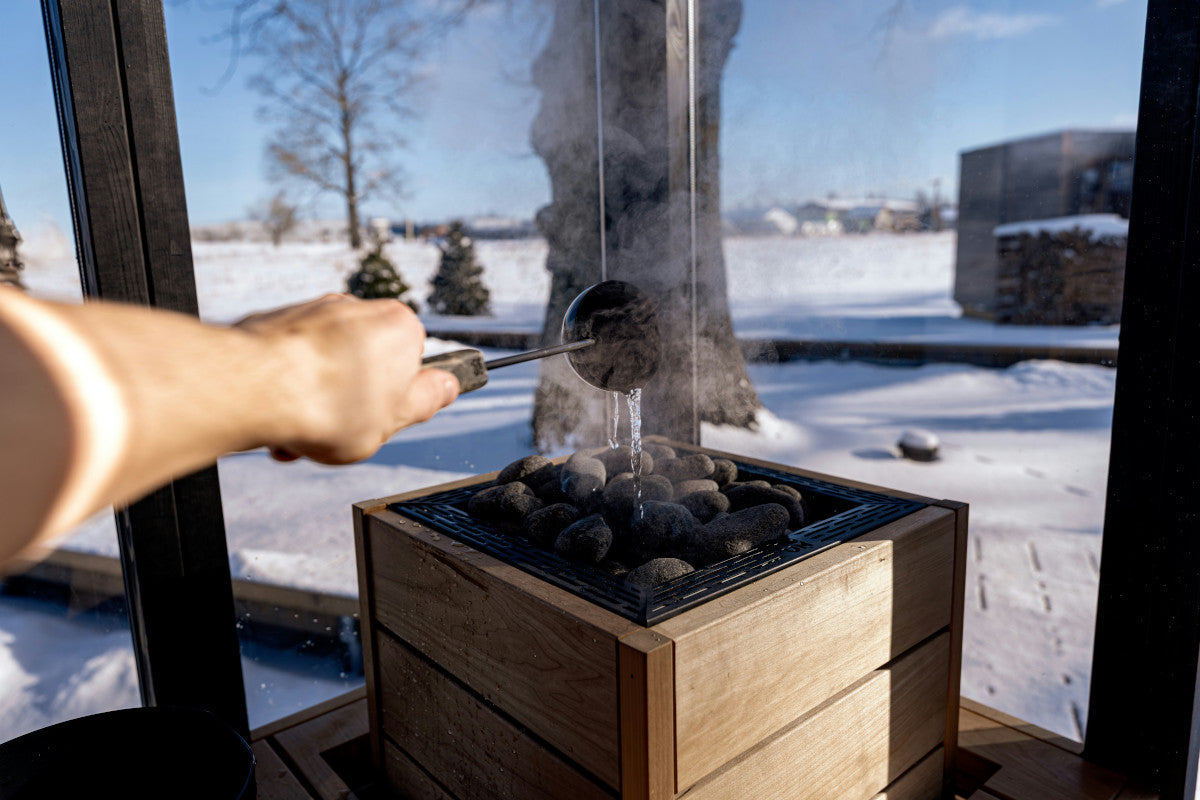
There are two ways you can tap into the traditional sauna vibe, and this is the more convenient and accessible one. It runs through an electric heater with stones stacked on top. You can pour water on the hot stones to create steam. Most people shopping for a traditional sauna end up here because it's the least fuss day-to-day.
Pros
- Holds a set temperature without attention
- No chimney or firewood needed
- High heat for an intense sweat
- Can control humidity through steam
Cons
- Needs a 240V dedicated circuit and a licensed electrician
- 30-45 minutes to preheat
Top Pick
The SaunaLife Model CL4G is a 3-person outdoor cabin with a full glass front. It’s handcrafted from thermo-spruce lumber in Northern Europe, and you get to choose your electric heater. Starting at $4,990.
Traditional Wood-Burning Saunas - The Most Authentic Option
This type of sauna transports you to ancient Finland. It relies on a wood stove with a chimney through the roof. You build the fire, feed it during the session, and the heat rises and falls with the flame.
The smell of burning wood creates a one-of-a-kind ambiance. These are typically installed outdoors. Be aware that they are a bit less convenient not only to run, but to maintain.
Pros
- No electrical hookup at all
- The fire ritual and wood smoke are the experience, not just the heat
- More affordable over the course of time if you have access to free firewood
Cons
- You’ll need a chimney with proper clearances
- Jarder to control the heat with precision
- Takes a little longer to reach temperature
- Heat fluctuates and demands hands-on management every session
Top Pick
The Dundalk CT Serenity 6 Person Barrel Sauna is a statement. It’s crafted from eastern white cedar and features a front porch with two windows. $6,214 for the wood-burning build.
Infrared Saunas - The Most Accessible Option
An infrared sauna uses panels that directly heat your body instead of heating the space itself. It runs out lower temps (120-150°F) but doesn’t compromise on benefits or experience since the infrared light penetrates your skin to get right into your tissue.
These saunas are cheaper upfront and operate more efficiently. They’re also less work to install and maintain. Read our infrared vs traditional sauna comparison to learn more.
Pros
- Plugs into a standard household outlet (most models)
- Ready to use in 15-20 minutes
- More affordable upfront and over time
- Less intense for those who are sensitive to heat
Cons
- No stones or steam
- Lower cabin temps if you want that intense traditional heat
Top Pick
Dynamic’s “Lugano” 3-Person Full Spectrum Near Zero EMF FAR Infrared Sauna is a full spectrum, near-zero EMF sauna starting at $3,899. Canadian hemlock with Bluetooth and seamless DIY assembly.
Hybrid Saunas - The Best of Both Worlds
Can’t choose between infrared and traditional? You don’t have to. These saunas feature infrared panels and a traditional heater in the same cabin. Run one mode or both. The obvious pick for households that disagree on what a sauna should feel like.
Pros
- Two heating modes in one unit
- Covers the full temperature range from infrared to traditional
Cons
- Higher price point than single-mode saunas
- Fewer size options on the market
Top Pick
The Finnmark FD-4 Trinity 2-Person Hybrid Sauna combines Spectrum Plus infrared heaters with a Harvia Vega traditional heater and a red light therapy panel. $7,795.
Barrel Saunas - The Most Rustic Option
All the different sauna types we’ve covered thus far are differentiated by heating method. However, a barrel sauna is one of the different types of saunas to consider as well.
These saunas can run on infrared heating, but electric or wood-burning is much more common. The curved walls move heat around the cabin better, and the round roof sheds rain/snow on its own. See our barrel sauna vs square sauna breakdown for more insights.
Pros
- Heats faster than rectangular builds at the same capacity
- Compact footprint for outdoor placement
- Really unique aesthetic; a statement in any yard
Cons
- Less headroom than a cabin-style sauna
- Limited flat wall space for mounting accessories
- Typically only installed outdoors.
Top Pick
The SaunaLife Model E8W 6 Person Sauna Barrel-Window is thermo-spruce with a panoramic rear window and 6'5" interior height. $6,490 (heater sold separately).
Which of These Types of Home Saunas is Right For You?
Start with what matters most as you narrow it down among the different types of saunas:
- Heat experience: Traditional saunas feel more intense since the room you sit in is actively warming. Infrared saunas are a little more accessible to those who want the benefits of heat therapy without feeling like they’re torturing themselves.
- Installation: Infrared is the simplest. Traditional electric needs 240V. Wood-burning needs a chimney. Most kits are DIY friendly.
- Location: An indoor sauna fits a spare room or basement. An outdoor sauna opens up your yard. Barrel saunas take up less ground space than rectangular cabins.
- Budget: Infrared is the most affordable. Hybrid and outdoor cabins are the most expensive. Think about ongoing costs as well, as infrared saunas are more affordable over time (wood-burning is free if you have access to firewood).
Still not sure which of the different sauna types fits? Our blog has more comparison articles to help you narrow it down, such as our low-emf vs far-infrared sauna guide. Or, simply call (833) 322-4836 and let our team match you to the right setup.
Tips on Installing Your New Home Sauna
Most types of home saunas are DIY friendly, as we’ve said a few times already. But a big part of choosing among the different sauna types is figuring out where it’ll live. Let’s start there.
Should You Place it Indoors or Outdoors?
Indoor saunas let you elevate your wellness regimen without stepping out of your house - a spare room, basement, garage, or large bathroom all work. You'll need ventilation and clearance around the unit.
Outdoor saunas need a level pad but you don’t have to give up square footage - and the sauna can easily become a focal point in your yard. You also get to step into cold air after a session, which is a nice contrast. Just be aware that outdoor saunas need weather-resistant materials.
Most types of home saunas work in either setting, though barrel saunas are almost always outdoor and infrared is usually designed for indoor spaces.
Navigating Space, Electrical, and Ventilation Requirements
Measure your space before you shop and check the product dimensions against your area, including ceiling height. Traditional electric saunas need a 240V dedicated circuit. Most infrared runs on 120V.
Making the Most of Every Sauna Session
- Hydrate before you get in and again when you get out. Non-negotiable.
- Start around 15-20 minutes per session. Build from there as your body adjusts.
- Consistency matters more than anything else, no matter which of these types of saunas you use. Three 20-minute sessions a week beats one marathon sit on the weekend.
Parting Thoughts on the Different Sauna Types
Hopefully, you have a solid grasp on which of the different types of saunas suits your space, electrical setup, and what you actually want the experience to feel like. Still on the fence? A personalized recommendation is just a click or call away at Premium Saunas!
Frequently Asked Questions
What types of saunas are there?
Traditional electric, traditional wood-burning, infrared, hybrid, and barrel are the main sauna types.
Which sauna is best for indoors?
Infrared since most plug into a standard outlet and don't need ventilation/chimney work. Traditional electric works, too.
Do certain saunas have more health benefits than others?
All types of home saunas promote circulation, relaxation, and recovery. The differences are in how the heat feels and the practical sides of buying, installing, and maintaining the unit.
Can I put a sauna in a tight space?
Yes. 1-2-person infrared saunas fit in closet-sized footprints. Check product dimensions before ordering.
Which is better, a wet or a dry sauna?
Traditional saunas can run wet (with steam) or dry. Infrared is always dry. Choosing between a dry sauna vs wet sauna is totally personal preference.
How much do saunas cost (upfront and ongoing)?
Infrared starts around $2,000. Traditional electric from about $4,000. Barrel saunas from $5,000. Ongoing costs are electricity or firewood and occasional maintenance.
How long do saunas last?
15-20 years with proper care. Heating elements may need replacement after 5-10 years of regular use.