You’ve made your mind up - you’re bringing the benefits of sauna therapy into your routine. But now it’s a matter of figuring out whether you should go with an indoor vs outdoor sauna.
There’s a lot to think about here beyond the obvious (where you have space). You have to consider where the sauna will best fit into your lifestyle as well. Not to mention the installation variances, the cost differences, and all the other factors at play.
Don’t sweat it (pun intended). We’ve put together this guide to help you figure out where your sauna should live. And whether you decide to go with an indoor sauna or outdoor sauna, you can shop our selection here at Premium Saunas for the best brands and models online!
Key Takeaways
- Indoor saunas are easier to install (and maintain), heat up faster, and cost less.
- Outdoor saunas can live anywhere on your patio or backyard if you’re tight on square footage inside your home.
- Indoor saunas need a permanent space in your home, which you might not have. Outdoor saunas need site prep, electrical runs, and weatherproofing.
- Premium Saunas can help you narrow it down to the right location and even recommend the perfect unit for your goals and budget.
Pros and Cons of Indoor Saunas
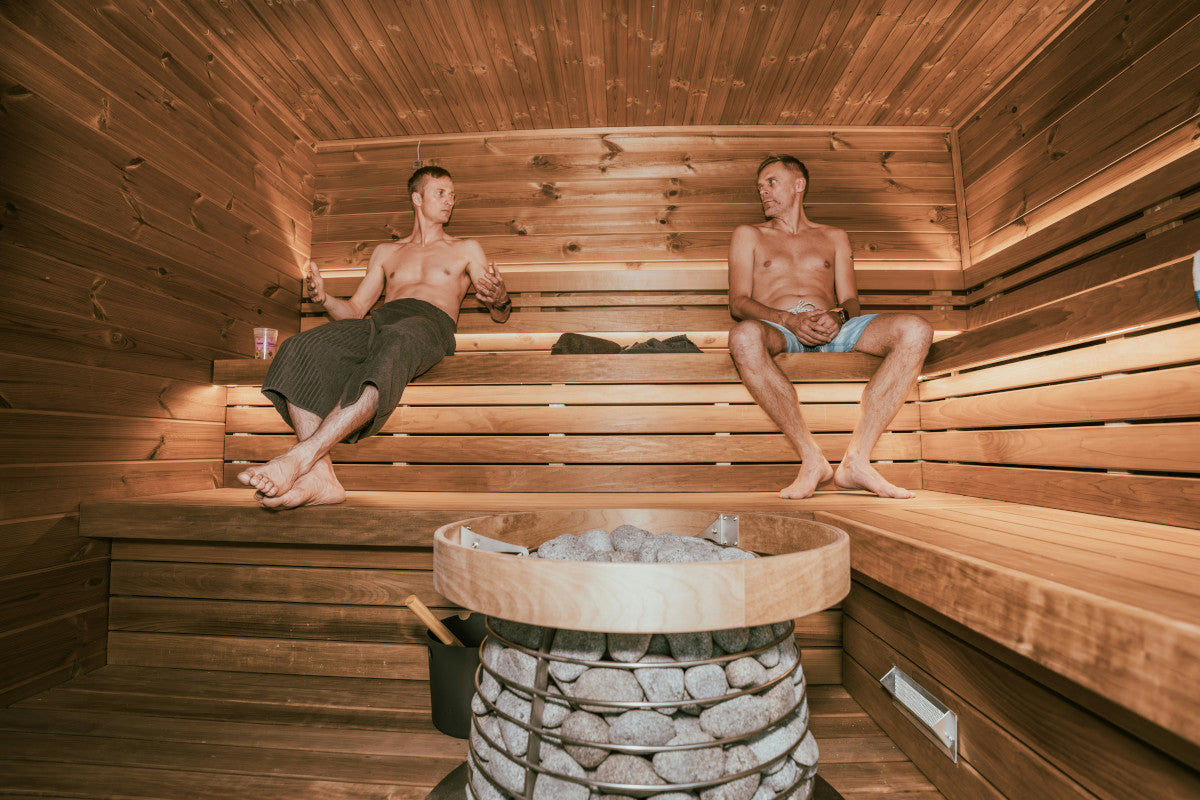
Whether it’s an indoor infrared sauna or a traditional indoor sauna, these structures turn unused square footage into your own personal self-care oasis. A spare bedroom, a massive bathroom, a garage, a basement - they can go anywhere inside your home that space allows.
The appeal here is convenience. You never have to venture out into the elements or wait forever for your sauna to heat up when it’s freezing outside. These tend to be easier to install, too.
Pros
- Use your sauna year-round no matter the weather
- These saunas heat up faster in cold climates because ambient temperatures are warmer
- Infrared saunas literally just plug into an outlet.
- Minimal maintenance needed since the unit isn’t exposed to rain and UV
- Having the sauna inside your home encourages you to use it more frequently
Cons
- Your capacity will be limited to what you have room for, which may be a small sauna
- You need to figure out the ventilation side of things to avoid overheating your house
- Not the same immersive experience as a sauna outdoors in nature
Pros and Cons of Outdoor Saunas
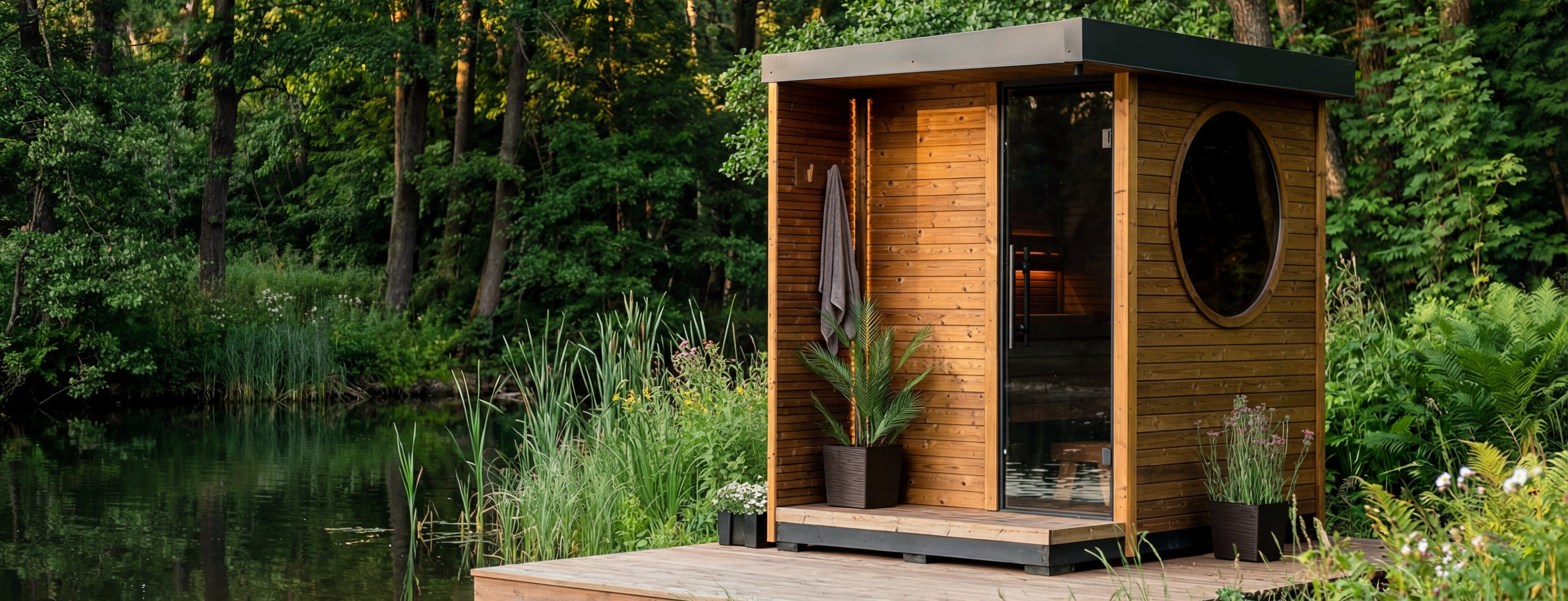
An outdoor sauna takes your wellness regimen out into the beauty of your backyard. You can put these on your patio, by your pool, or out by the garden. Anywhere you have a level space. These range from outdoor barrel saunas to full cabin-style enclosures. You get a lot more room to work with when you choose to buy a luxury outdoor sauna, but the installation and maintenance requirements are much higher.
Pros
- You’re not sacrificing any of your interior space
- You can buy a much larger sauna since you have more room outdoors
- The natural surroundings of your yard enhance the experience, especially in wooded/landscaped areas
- Easier to accommodate a wood-burning stove for the most rustic vibe possible
- You can vent moisture right outside if you plan on adding steam to your sauna
Cons
- Mostly limited to a traditional outdoor sauna (we do have some infrared outdoor models)
- Higher total installation cost when you account for site prep, foundation, and electrical
- Outdoor saunas are most expensive because they must be made from weatherproof materials
- Takes longer to heat up in cold climates (but can heat faster during the summer in warm climates, so it’s a trade-off)
- More exterior maintenance needed (wood treatment, roof checks, and seasonal upkeep)
Indoor vs Outdoor Sauna: Which is Right For You?
You can’t go wrong either way, because you’re getting all the benefits sauna therapy has to offer either right inside your home or just out your back door. But choosing between an indoor vs outdoor sauna is certainly no small decision, and we want to help you get it right.
Think About Your Climate
We usually tell our customers to filter by climate first in comparing an outdoor vs indoor sauna.
You can comfortably use an outdoor sauna year-round without any crazy insulation as long as you live in a moderate climate. You’ll enjoy faster heat-up times in the summer compared to indoor units if you live somewhere like Arizona.
On the other hand, an outdoor sauna will take forever to heat up during the winter in harsh climates, like on the East Coast or in the Northern United States. You’ll need a more powerful heater to make it work.
An indoor sauna takes all the guesswork out of heating times.
Consider Your Available Space
You might not even be able to choose between an indoor vs outdoor sauna. Can you even find space for a sauna inside your home? Ask yourself that first. And not just in terms of what you can fit. Think about what’s practical. If you can barely get the door open to squeeze yourself inside, then it’s probably not a good idea.
That said, you do have plenty of options to make an indoor sauna work. A 1-person indoor sauna fits in a large closet or bathroom corner. A 5-person indoor sauna needs a dedicated room or a section of the basement.
The outdoor vs indoor sauna question answers itself if you can’t find ample space inside your home. You probably have plenty of room outdoors. That’s your only option at that point.
Installation Complexities
There are installation nuances whether you go with an indoor or outdoor sauna.
For example, indoor saunas need very careful ventilation to avoid transferring heat (and potentially humidity) to the rest of your home. We carry quite a few infrared models that literally just plug into your standard 120V outlet. That said, traditional models might need a 240V outlet.
In contrast, ventilation isn’t a concern outdoors. But there are other hurdles. The first is finding a flat space where you can pour a concrete pad. Or at the very least, a leveled gravel base. You also need a weatherproof electrical run from the panel to the sauna site. Potentially even a building permit in HOA neighborhoods.
More importantly, the structure itself needs to be able to withstand harsh outdoor conditions. That means choosing a wood that’s resistant to rot and decay from moisture, UV rays, and insects. Translation - higher costs.
Ambiance vs Convenience
This is where personal preference comes into play. An indoor sauna is private, convenient, and always a few steps away. An outdoor sauna is surrounded by fresh air and natural light, where you can fully unwind and immerse yourself in nature.
A lot of purists prefer the outdoor sauna specifically because of the contrast that you get between cold air outside and hot air within the unit. But this is totally up to you.
What’s Your Budget?
We’ve touched on this a bit throughout, but you’ll pay a different price for indoor and outdoor saunas because the latter needs to be made from much more specific materials - and it might require a larger heater with more installation prep, too.
But the good news is whether you go with an indoor or outdoor sauna, Premium Saunas carries all the best brands and models at the lowest prices online, guaranteed! We also offer free shipping and hassle-free financing across our catalog to help you get the best deal possible.
So, what are you waiting for?
Whether You Want to Buy and Install an Indoor or Outdoor Sauna, Premium Saunas Has You Covered!
Our customer service team helps people like you pick the right sauna all day, every day. So why not get in touch for personalized guidance? We’ll talk about all the things that matter most and help you narrow it down. Shop now!
Frequently asked questions
Can you put an indoor sauna outside (and vice-versa)?
An indoor sauna can only go outdoors if it’s made from weatherproof materials like cedar. Otherwise, it may start decaying from moisture, UV rays, and bugs. If nothing else, this could void your warranty. An outdoor sauna can technically go indoors, but at that point, you’ve paid a premium for weatherproof materials that you don’t actually need.
Is it more work (and money) to install an indoor or outdoor sauna?
Outdoor installations are almost always more involved with site preparation, electrical runs, foundation work, and permitting. But indoor installations need careful ventilation work, so there are tradeoffs between the indoor vs outdoor sauna in this regard.
Which is easier to maintain - indoor vs outdoor sauna?
Indoor saunas for sure. They’re not exposed to the elements. Outdoor saunas may not need a ton of work if they’re made from something like cedar.
Which heats up faster, an outdoor vs indoor sauna?
An indoor sauna in a cold environment heats up faster than an outdoor sauna. On the other hand, an outdoor sauna in a hot environment will heat up faster than an indoor sauna. In most cases, the indoor sauna has the edge in speed, though.