The infrared vs traditional sauna question is one of the first decisions any sauna buyer faces - and the answer depends more on your goals than on which type is “better.” Here are the key takeaways:
- Traditional sauna: Uses an electric heater to warm the space itself. Typically operate at higher temperatures, allow for the use of steam, but cost more upfront (and to maintain). Versatile in indoor or outdoor installations.
- Infrared sauna: Penetrates the body to directly warm tissue rather than the room itself. Operate at lower temperatures without compromising on the benefits or experience. Often more affordable, but tend to be limited to indoor installations.
We carry the top sauna models from the most trusted brands here at Premium Saunas, whether you're ready to buy an infrared sauna or buy a traditional sauna. The guide below will help you choose, or you can get in touch for a personalized recommendation!
Infrared Sauna vs Traditional Sauna (Quick Comparison)
|
|
Traditional Sauna |
Infrared Sauna |
|
How it heats |
Heats the air (and optional steam) |
Heats the body directly via infrared panels |
|
Temperature range |
150-195°F |
120-150°F |
|
Humidity |
Low to high (steam optional) |
Dry heat only |
|
Heat-up time |
30-60 minutes |
15-20 minutes |
|
Session length |
15-20 minutes typical |
30-45 minutes typical |
|
Electrical |
Often 240V dedicated circuit |
Most plug into standard 120V outlet |
|
Installation |
Indoor or outdoor, may need ventilation |
Primarily indoor, plug-and-play |
|
Best for |
Intense heat, steam, authentic Finnish experience |
Gentle deep heat, ease of use, lower operating cost |
What is a Traditional Sauna?
This is the type of sauna you would have found in ancient Scandinavia - except that they would have used wood stoves rather than electric heating elements.
At any rate, it’s what most people associate with sauna therapy. A traditional sauna heats the air inside the cabin. usually at 150-195°F. You can enjoy the dry heat or pour water over heated rocks to create steam (a practice called löyly). This is as versatile as a sauna gets.
How it Feels
Intense. The surrounding air is genuinely hot, and adding steam takes the whole experience up a notch. Sweating begins quickly. Sessions typically last 15-20 minutes because your body reaches its limit faster at these temperatures.
Who Should Use it?
Anyone who wants the classic sauna experience - high heat that hits hard and fast, along with the option for steam in a session. Traditional saunas are best for outdoor builds and cold-climate installations, but they can work wonderfully indoors as well.
Popular Models at Premium Saunas
We carry an unprecedented collection of traditional saunas.
The Golden Designs "St. Moritz" 2 Person Barrel Traditional Sauna is a cedar barrel with a Harvia 6kW heater that reaches 170-185°F. Solid entry point starting at $4,999.
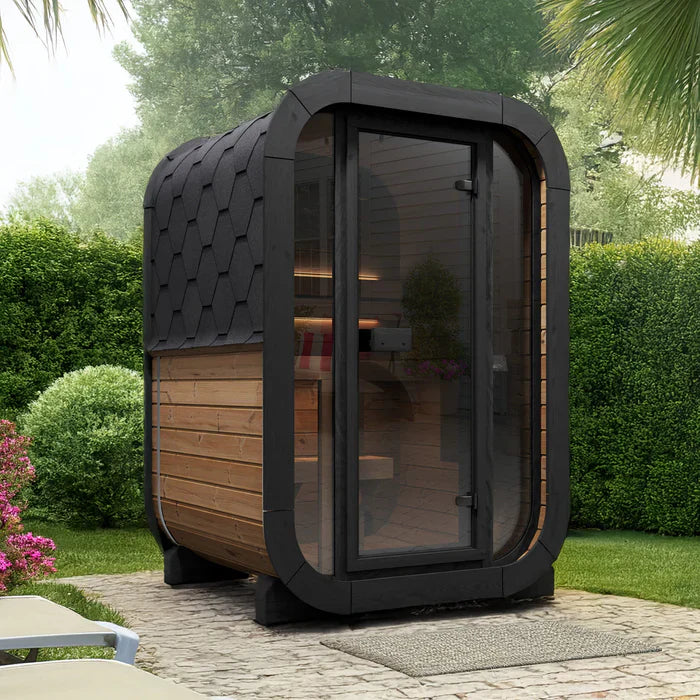
Want something more refined? The Auroom Mira S Outdoor Cabin Sauna Kit features a full glass front wall, thermo-aspen interior, and takes less than 6 hours to assemble. Starting at $14,990.
These are just two of the many models you’ll find in our catalog. Take a look and see what catches your eye. In the meantime, let’s introduce the other half of our traditional vs infrared sauna comparison.
What is an Infrared Sauna?
An infrared sauna doesn’t actually heat the room you sit in. Instead, infrared panels emit wavelengths that penetrate your skin and warm your body from the inside out.
Operating temperatures sit between 120-150°F (noticeably cooler than traditional), but you still sweat heavily because the heat reaches deeper tissue. This is the main difference between an infrared vs traditional sauna: one heats the room, the other heats you.
How it Feels
Gentler on the surface but surprisingly deep. The air doesn't feel oppressively hot, so sessions can run longer - 30-45 minutes is common. The sweat builds gradually rather than hitting you all at once. The whole vibe just feels more soothing and relaxing rather than overwhelming. You still get the therapeutic benefits heat therapy has to offer in general, though.
Who Should Use it?
People who don't enjoy extreme heat but still want the cardiovascular, recovery, and stress relief benefits of sauna use. Infrared is also the easier pick if you’re tight on space and want something that you can easily install yourself. Operating costs tend to run lower too.
Popular Models at Premium Saunas
Your search for a home infrared sauna for sale ends here at Premium Saunas.
The Finnmark FD-2 Full Spectrum 2-Person Infrared Sauna combines far and near infrared with medical-grade red light therapy - low EMF panels in a cedar interior at $5,995 on a standard 120V outlet.
The Dynamic "Lugano" 3-person Low EMF FAR Infrared Sauna uses nine carbon heating panels in hemlock at $2,699 with Bluetooth and chromotherapy lighting. It’s a more accessible entry point. But, it’s worth mentioning you’ll have access to price matching across our collection.
Infrared Sauna vs Traditional Sauna: Which is Right for YOU?
We get asked all the time - is infrared sauna better than traditional sauna? Only you can answer that question! Anytime customers come to us wondering which path they should take, we ask them a few practical questions in response:
What Health Goals Interest You the Most?
Both saunas improve circulation and support muscle recovery. You’re also getting the stress relief and detoxification benefits either way. There is a subtle difference between infrared and traditional sauna as far as the full spectrum of benefits goes, though.
Traditional has the edge on respiratory benefits in the infrared vs traditional sauna health comparison. Steam opens airways, and the intense heat mimics moderate cardiovascular exercise.
On the other hand, infrared heat penetrates tissue deeper at lower temperatures. A lot of people find that this is a better approach to easing chronic pain and joint stiffness. It may move the needle more on post-workout recovery, too.
Where Do You Plan to Install the Sauna?
The infrared vs traditional sauna installation experience couldn't be more different. Infrared saunas plug into a standard outlet and fit indoors - browse indoor infrared sauna for sale options to see how compact they can be.
In contrast, traditional saunas are more versatile. A traditional indoor sauna works with proper ventilation, and a traditional outdoor sauna is the classic backyard build. Just know you'll typically need a dedicated 240V circuit and potentially a foundation for outdoor units.
What is Your Budget For the Sauna?
The infrared vs traditional sauna price gap is noticeable, too. A quality 2-3 person infrared unit starts around $2,000, while traditional saunas start around $3,500 and climb into five figures for premium cabin builds.
An infrared sauna kit for sale is one of the most accessible ways to create your own personal self-care oasis at home. Especially when you take advantage of our price-matching and hassle-free financing options.
But you need to plan on the ongoing costs of operation as well, regardless of whether you choose an infrared vs traditional sauna.
Don't Overlook Ongoing Costs, Either
Infrared saunas draw less power since most run on a standard 15-20 amp circuit and heat up in 15-20 minutes. Traditional saunas pull more wattage over longer preheat times on a 240V line. The infrared vs traditional sauna operating cost gap adds up over months of regular use.
So, Is Infrared Sauna Better Than Traditional Sauna For You?
There's no universal answer. That’s why we sell both.
Want intense heat with the option for steam? Go with a traditional sauna.
Prefer gentle deep heat that warms up fast and installs simply? Buy an infrared sauna.
The “better” sauna is the one that matches your space and your habits. So, only you can answer - is infrared sauna better than traditional sauna, or is it the other way around?
Whether You Choose an Infrared or Traditional Sauna, Take the Next Step Today!
Every unit we carry ships free with a full manufacturer's warranty, and our team is available seven days a week to help dial in the details. Whether you’re still on the fence choosing between an infrared or traditional sauna, or just want a personalized recommendation, connect today.
Once you've settled the infrared sauna vs traditional sauna question, the next move is narrowing by size. You can find the perfect fit below, or get in touch with our customer service team for support:
1-person sauna | 2-person sauna | 3-person sauna | 4-person sauna | 5-person sauna
Wrapping Up Our Infrared Sauna vs Regular Sauna Comparison
The infrared sauna vs regular sauna decision isn't about picking a winner. The question is whether you want the full-blast Finnish experience or a gentler daily sweat with less setup. Answer that honestly, and the choice makes itself. Remember, an expert recommendation is a click or call away!
Frequently Asked Questions
What is the downside to an infrared sauna?
No steam capability and a lower ambient temperature, which some find underwhelming. EMF exposure is also a concern (unless you use low/zero EMF panels).
What's the difference between infrared and traditional saunas?
The infrared sauna vs traditional sauna difference is straightforward: traditional saunas heat the air to 150-195°F and can produce steam, while infrared saunas heat your body directly at 120-150°F with no steam. The difference between infrared and traditional sauna comes down to whether the heat reaches you through the air or through your skin.
Is an infrared or traditional sauna "healthier"?
Both have documented cardiovascular and recovery benefits through different mechanisms. Traditional has the edge on respiratory benefits from steam. Infrared may penetrate deeper into soft tissue at lower temperatures.
Is infrared sauna as good as regular sauna?
Yes - just different. The infrared sauna vs regular sauna comparison isn't about quality. You'll sweat plenty and recover well either way. What changes is the intensity, the experience, and the costs - not the effectiveness.
Will I still sweat in an infrared sauna?
Absolutely. The infrared sauna vs regular sauna sweat factor surprises a lot of people. Infrared heats your core temperature directly, so you sweat plenty despite the cooler air. Many people say they actually end up sweating more because sessions are longer.
Are infrared saunas or traditional saunas better for detoxing?
Both will help you sweat out all that nasty stuff built up in the body. Some research suggests infrared may mobilize deeper-stored toxins due to tissue penetration, for what it’s worth.
Which is better for soreness and recovery, traditional or infrared sauna?
Traditional saunas boost blood flow through ambient heat. Infrared penetrates deeper into joints and soft tissue, which some athletes prefer.
Can I turn an infrared sauna into a steam sauna?
No. Infrared panels aren't designed for moisture exposure, and there are no heated rocks to pour water over.
Are there hybrid saunas that combine these styles?
Yes. Our hybrid saunas for sale pair a traditional heater with infrared panels in the same cabin, giving you the freedom to use either mode as you see fit.
Can I install a sauna in my home?
Absolutely. You can buy a sauna kit today and create your own personal wellness oasis from the comfort of home - it’s easier and more affordable than you might think. Reach out for personalized support from A to Z!